One Eternity Later
What I did on my summer vacation
The last post ended with me prying open a prototype and finding an ant colony living inside it, larvae and all. A real low point, narratively speaking. Then I did the responsible thing and left the country.
Summer happened. There was a trip to California, then a longer one to Ireland. The bench in New York went quiet for a while, which is the polite way of saying I was eating cheese on a different continent. Progress slowed. It did not stop. A surprising amount of this project happens on tray tables and in hotel rooms, where all you need is a laptop and a stubborn problem.
The travel did push one thing way back. I kept meaning to send the boards off to be manufactured, and I kept not doing it, because finalizing a circuit board from a different time zone is a special kind of procrastination fuel. I finally got the order in, and the blue box landed on my counter this week.
Inside were my first real custom circuit boards. Up until now Phoebe has been a pile of off-the-shelf breakout boards wired together and held in place with optimism. These are boards I drew myself, sent to a factory, and got back as actual hardware with my plant’s name on the silkscreen.
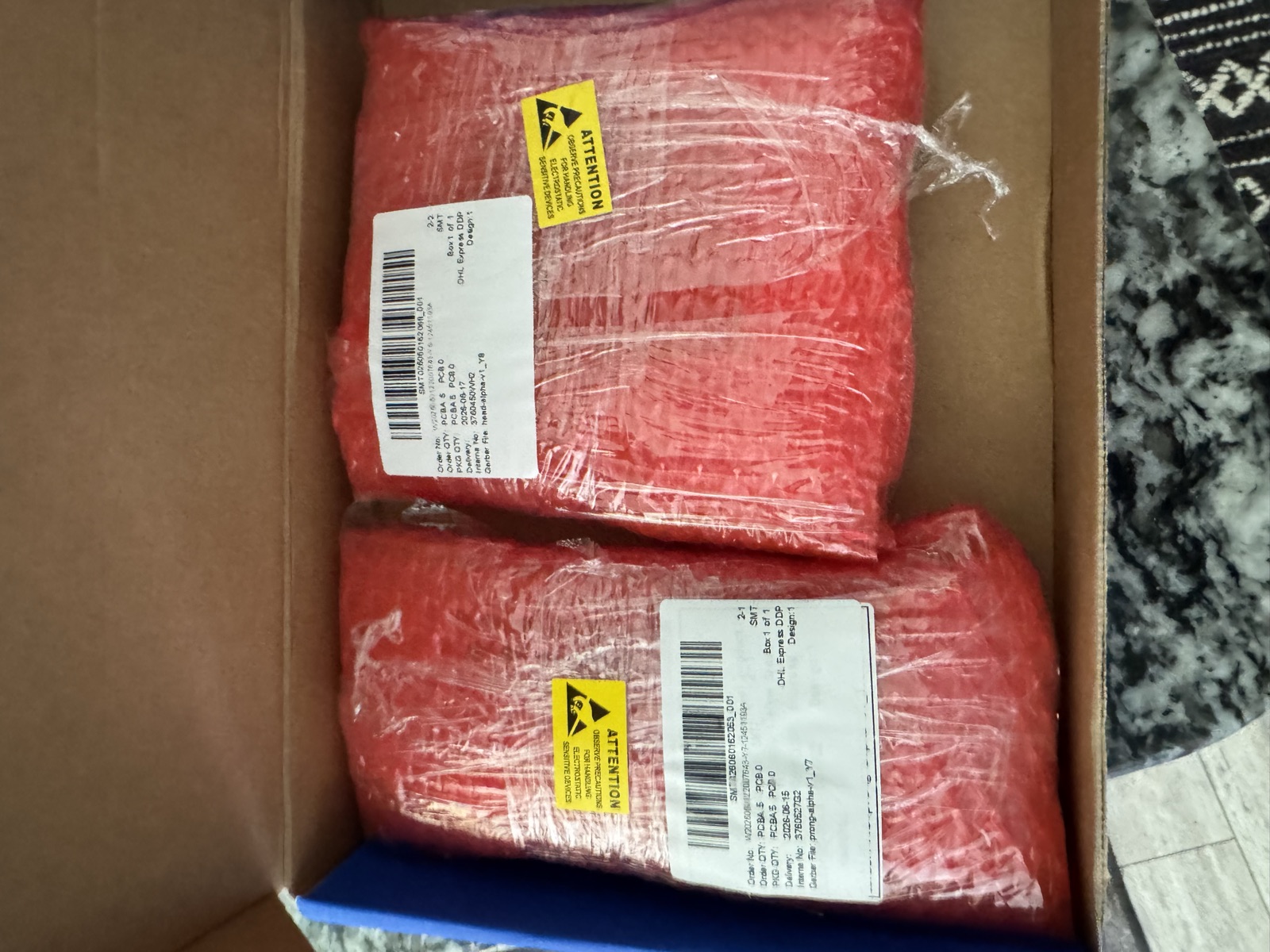
Three boards, one bench
There are three custom boards in this version of Phoebe. The Prong is the soil sensor, the bit that actually goes into the dirt. The Head holds the sensors that need to breathe and see the sky. The Spine is the backbone that ties everything together and gives the whole bird a nervous system.
I designed them in that order, the Prong first and the Spine last. That detail turns out to matter.
I put the first two on the bench.
The Prong, my firstborn
The Prong was the very first circuit board I have ever designed. So, predictably, it does not work.
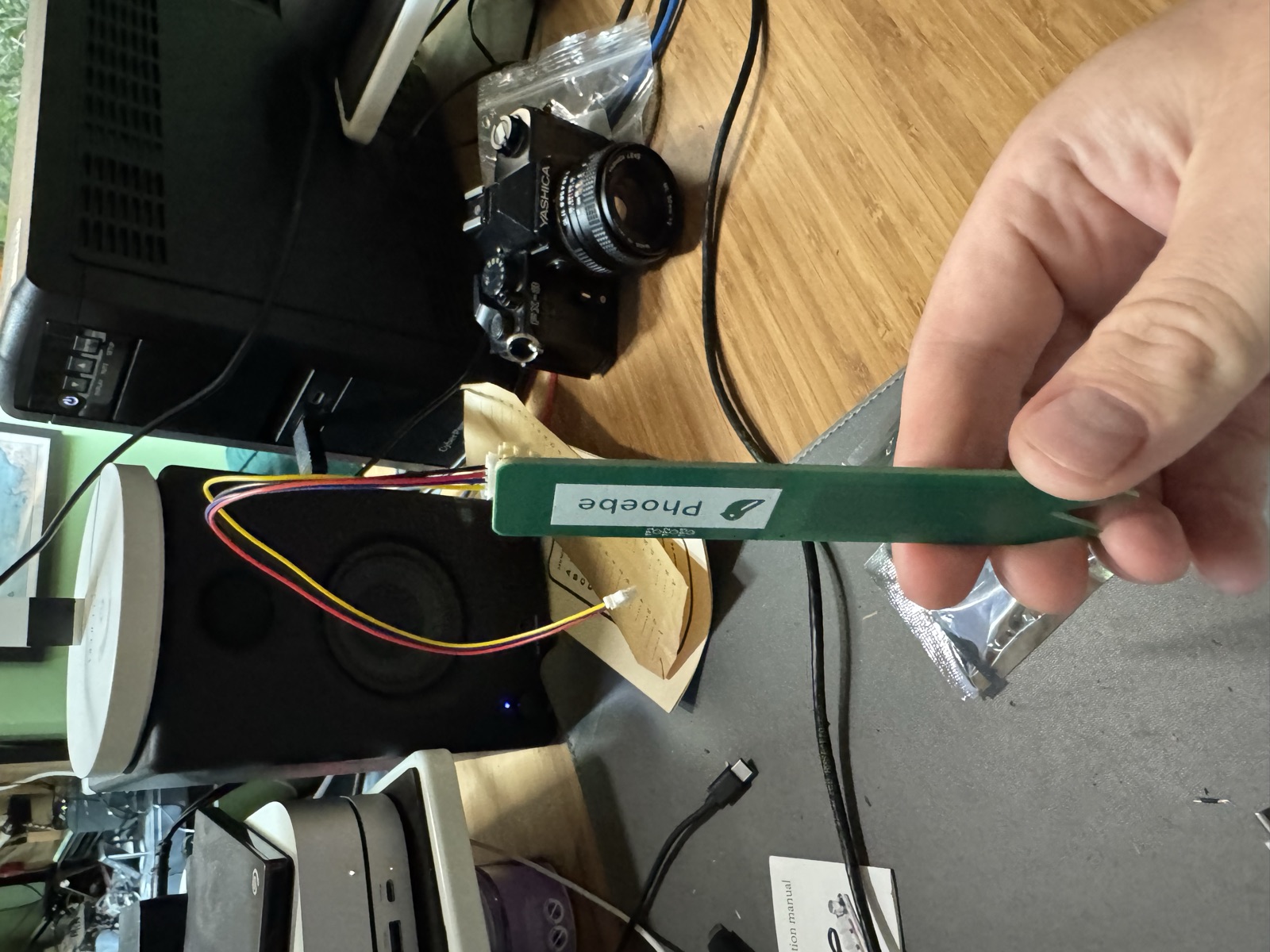
I want to be fair to her, because she is not a total loss. After a fair amount of bench surgery I got her to power up, talk to me, and report soil temperature and air humidity. The basics are there. The skeleton is sound. She is a real working device in most of the ways that count.
But the one job she exists to do, sensing moisture in soil, is the one thing she cannot do. The sensing part of the board has a layout problem I baked in at design time, and no amount of clever bench work fixes a mistake you drew six weeks ago. She needs a redesign to be functional.
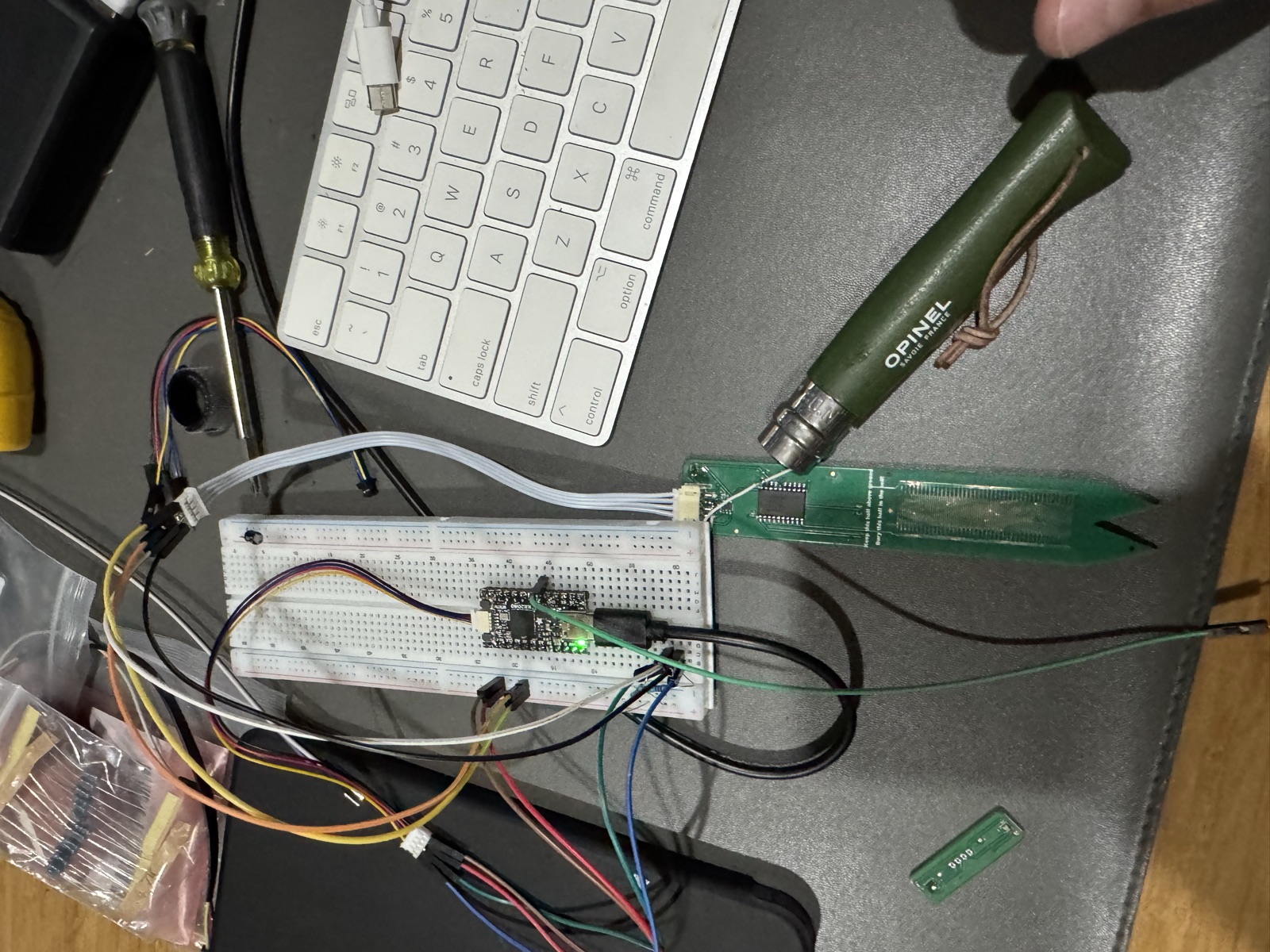
I am genuinely not upset about this. The Prong proved that the idea works and that I can take a thing from my head to a factory in China and back. That it needs another lap is exactly what a first attempt is for.
The Head, which had the decency to just work
The Head was the last board I designed. It works flawlessly.
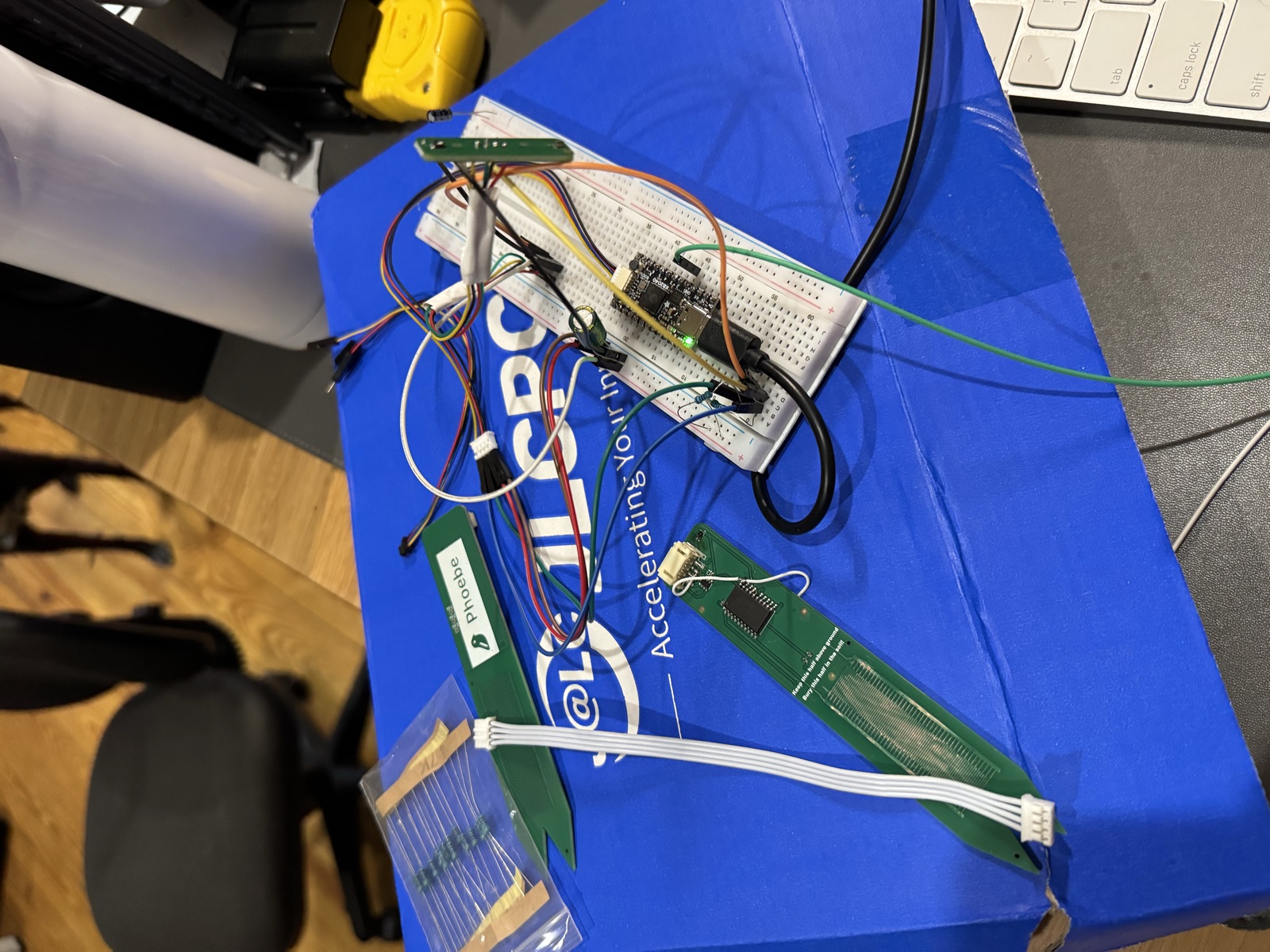
I plugged it in and it just did its job. The light sensor saw the light. The gas sensor passed its self-test and started smelling the room. There was no saga. There was no bench surgery. There was a slightly anticlimactic feeling of “oh, is that it.”
The lesson writes itself. The first board I ever designed is the one held together with bodge wires, and the last one is the one that works the first time. You get better at this by doing it badly a few times first. Nobody tells you that the reward for the practice is that your most recent mistake is smaller than your last one.
Meanwhile, in the dirt
While all of this was happening on the bench, the actual point of the project kept going outside.
The garden started producing. I pulled the first real beet harvest of the year, which is the kind of small triumph that makes the soldering feel worth it.
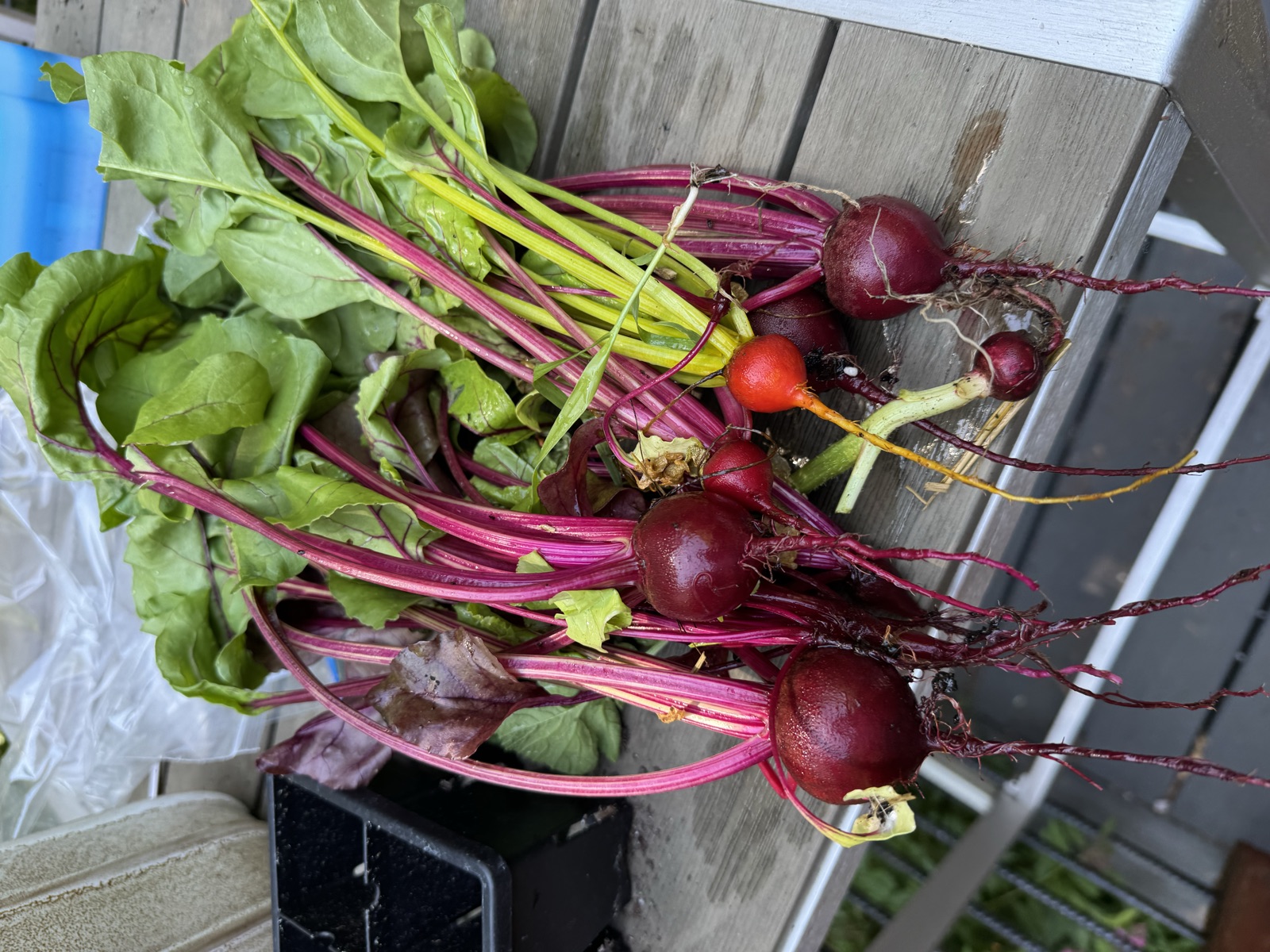
Beets, salad greens, broccolini, and a cabbage worm situation I will spare you the close-up photos of. The point is that I have been actually using Phoebe through a real growing season, not just testing her, and using a thing is the fastest way to find everything wrong with it. A pile of small software improvements came straight out of leaning on her while my hands were dirty.
The biggest one is a fix to a bug I had pinned on the ants. Back in that post, Phoebe kept waking up not knowing who she was, her name and WiFi password wiped clean, and the ants made a convenient suspect. The real culprit was me.
Early on, while I was first getting WiFi provisioning working, I added a fallback. If she could not connect, she would wipe her saved credentials and drop back into setup mode. It seemed reasonable at the time. In practice it meant that every time the WiFi so much as blinked, she nuked her own memory. A router unplugged for a minute, a neighborhood power outage, a heavy fog rolling through the cold frame, and she would forget everything and sit there politely waiting to be reintroduced.
I took the fallback out. Now a dropped connection is just a dropped connection. She waits, she retries, and she keeps her name. She no longer gets amnesia every time it rains.
Next: can I make the hard one work
That leaves the Spine.
The Spine is the backbone, the board that everything else plugs into, and it is by far the most complicated of the three. If the Prong is my firstborn and the Head is the one that turned out fine, the Spine is the final boss.
It is at the factory in China right now. The next post is the one where I find out whether the most ambitious board I have ever designed survives contact with a bench, or whether it joins the Prong in the redesign pile.
I have a guess. I am not going to tell you what it is.
— Ben