Hello, Phoebe
Please allow me to introduce myself
I’m Ben. I’ve been tinkering with software and electronics since I was a kid, which is a polite way of saying I’ve been taking things apart and occasionally putting them back together for about thirty years.
Professionally, I’ve spent my career in data science and tech leadership at companies ranging from “you’ve definitely heard of it” to “we’ll explain what we do at the next fundraise.” I’ve shipped models, built products, led teams, and mass-produced more dashboards than any one person should be responsible for.
But this isn’t really about any of that.
The garden
Last year I started my first garden. I was immediately, embarrassingly hooked. There’s something about understanding the variables that allow things to grow. Soil composition, sun exposure, water timing, temperature swings. It’s a constant experiment, and unlike most of my experiments, this one produces snacks.
Within a few months, the group texts with my buddies went from movies and fantasy football and politics to pictures of Japanese beetle damage and home pickling techniques. You know, normal stuff.
The AI thing
Around the same time, I decided to stop pretending AI wasn’t happening and see if my data science background could help me use it for something genuinely good. (As opposed to, say, not-so-slowly unraveling the fabric of society. The jury’s still out on the whole field, honestly.)
I’m still figuring it out. But I built a couple of tools I’ve found personally useful, and I got really interested in one idea in particular: using AI to build and maintain world models of physical phenomena. I’d been experimenting with metabolic simulations, where an AI doesn’t just answer questions but actually maintains a running model of a system, predicts what happens next, and then checks itself against reality.
That concept stuck with me.
The electronics relapse
This year, I randomly re-acquainted myself with electronics after a decade-long break. Turns out the ecosystem has gotten surprisingly robust. Yay Chinese manufacturing! The ESP32 is a wifi-and-bluetooth microcontroller that costs less than a sandwich. 3D printers now just… work. You can go from “I wonder if…” to a functioning prototype in an afternoon. It’s genuinely intoxicating.
My first project was building an ESP32 into an antique telegraph key so I could tap out messages in Morse code from my office that print on a receipt printer. The primary use case is annoying my wife. There’s been no looking back.
A few weeks of impulse-buying dev boards and sensors followed, during which I had no clear idea what I was actually trying to build. I was just a guy with a growing pile of components and a vague sense of purpose.
The collision
Then I built a soil sensor. Just a simple one, to figure out when I should start planting my spring garden. I wired it up to a gateway, got the data flowing, and thought: “Cool, I can see when the soil temperature is right.”
Within 24 hours, this had morphed into something entirely different. A full sensor suite. A world model running in the cloud. An AI companion with real-world tool calling, one that doesn’t just chat about your plants but actually observes them, builds an internal model of what’s happening, and gets better over time.
I’d accidentally built the prototype for Phoebe.
What is Phoebe?
Phoebe is a little bird-shaped sensor that perches next to your plant. She measures soil moisture, temperature, light, air quality, and even acoustic signals. All of that feeds into an AI that maintains a personalized model of your specific plant, in your specific home. She predicts, she compares, she adjusts. She’s not a dashboard. She’s a companion that learns.
The hardware is an ESP32 with a sensor suite that costs about as much as a nice bag of potting soil. The AI layer runs on cloud functions with Gemini. The form factor is a bird, because if you’re going to put a sensor in a plant pot, it might as well be something you’d actually want to look at. Also, because Fred Armisen told me to:
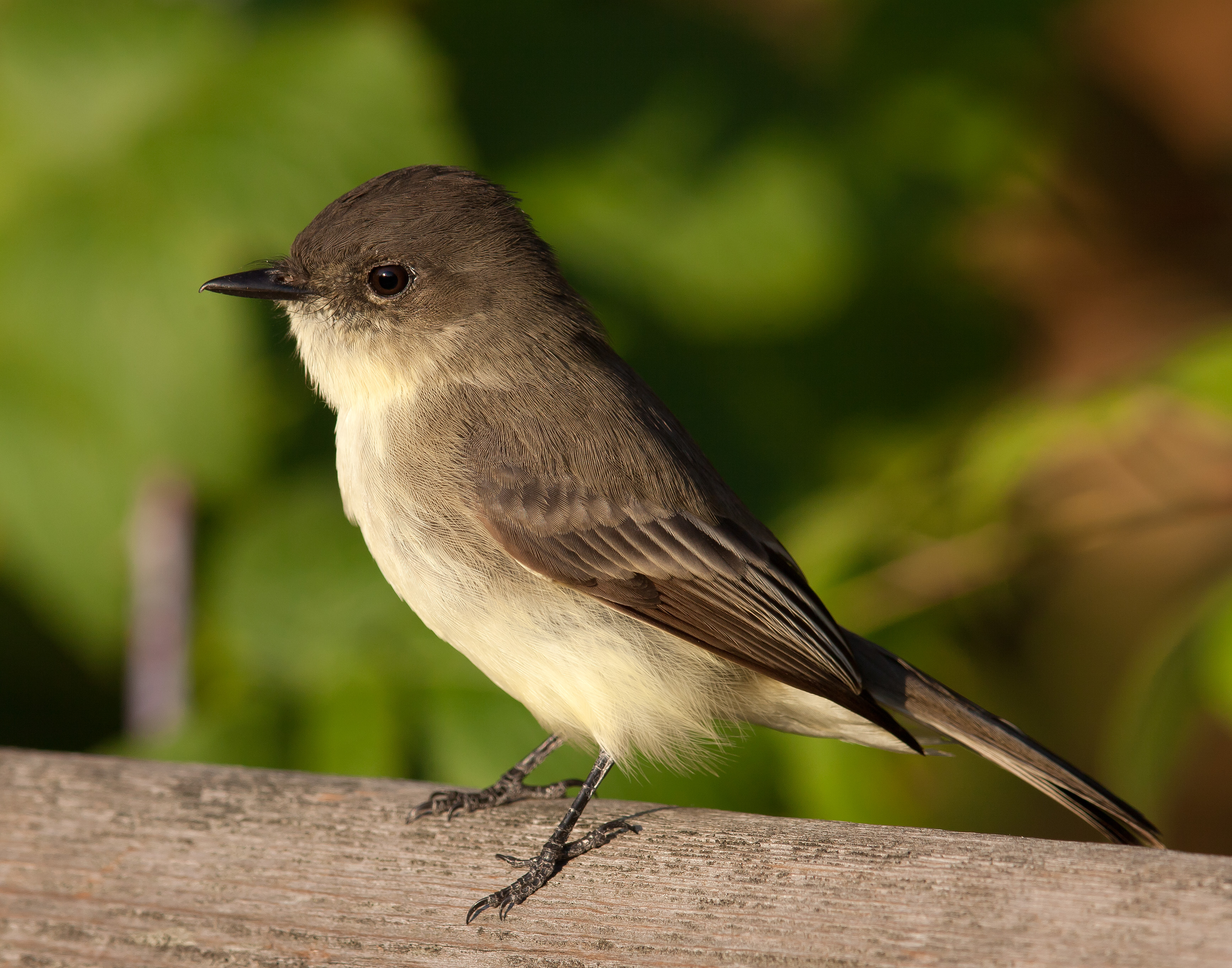
The name comes from the Eastern phoebes that live around my house and periodically try to move inside my house. They’re small, they’re persistent, and they’re always watching. Felt right.
What’s this blog?
This is the build log. Hardware design, firmware, AI architecture, 3D printing mishaps, and the ongoing process of turning a weekend hack into a real product. I’ll be building in the open because (a) it keeps me honest and (b) some of the most useful things I’ve learned came from people who shared their process, not just their results.
Should be a fun ride. Follow along if you’re interested. I’d love to hear from geeks and gardeners alike.
— Ben